
When a sauna becomes a cultural venue
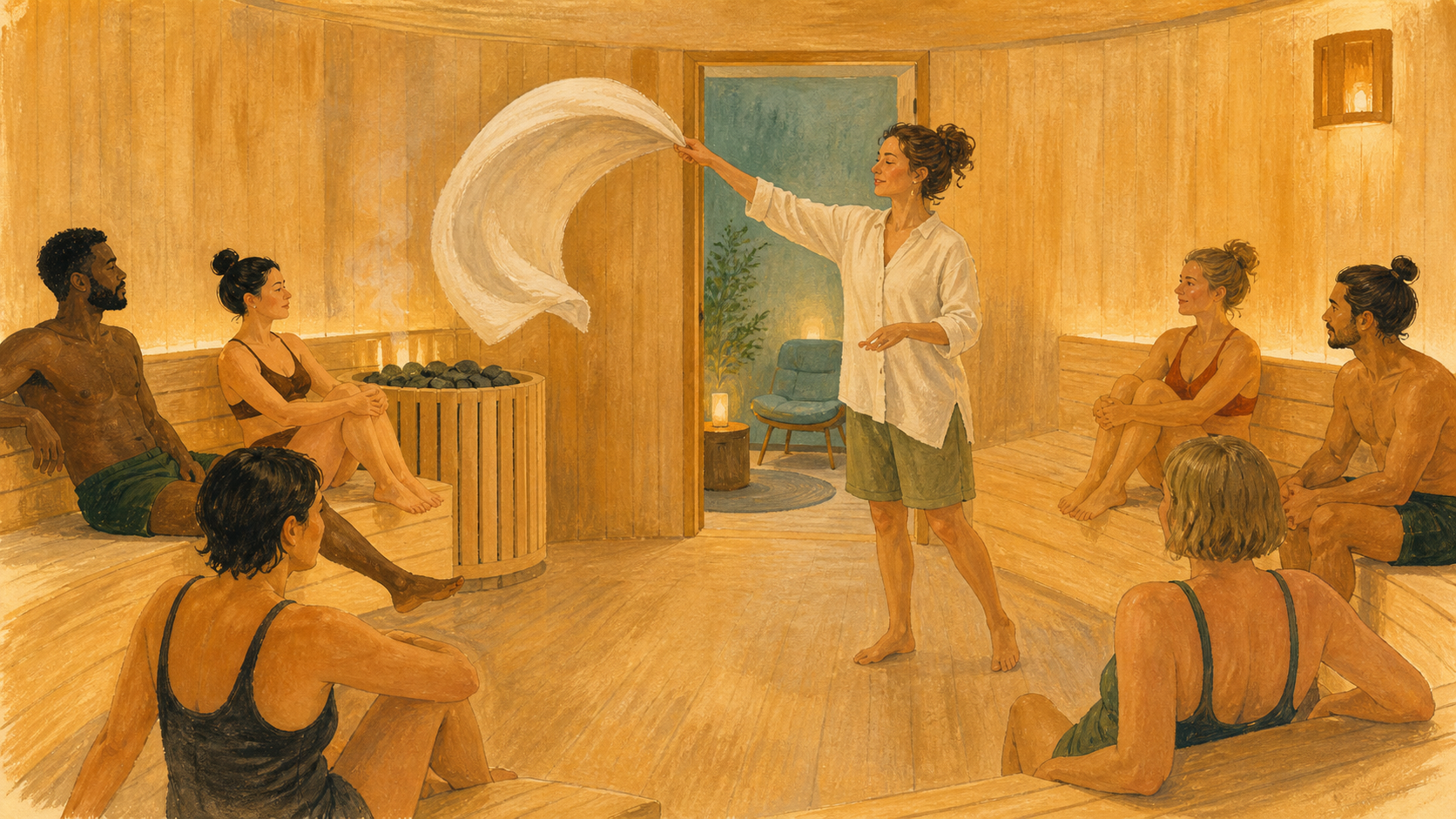
Sauna performance programming asks a different question from adding another treatment to a menu: what happens when the reason to gather is a story, a piece of music or an artist, and heat becomes part of that encounter? At Edinburgh's 2026 Festival Fringe, Sauna Theatre provides a current example. For spa leaders, its relevance lies in the relationship between cultural ambition and the practical freedom of each person in the room.
Sauna Sessions Arts Club's programme brings together aufguss, theatre, literature and music at Summerhall Arts. The organiser describes an 80-seat venue. Spa Business reported on the operating venue on 17 August, while Time Out's 14 August account independently describes attending performances. These sources establish more than an announcement, but they do not establish profitability, universal appeal or measurable health benefits.
The distinction matters. A festival can test an unusual proposition in front of people already seeking experimentation. A hotel spa serves a different mixture of expectations, time constraints and reasons for visiting. The useful response is to examine how an artistic programme could fit a particular service, rather than assume that a successful-looking launch supplies a transferable business model.
Sauna performance programming starts with an artistic brief
Begin with the experience the artist is trying to create. Is it close listening, communal storytelling, playful spectacle or an introduction to a particular tradition? Each intention changes the room, the welcome and the way people should be able to participate. A quiet reading and a musical event should not inherit identical descriptions simply because both happen inside a sauna.
The first brief should identify the audience, artistic form and proposed relationship between performance and bathing. Then ask the artist and sauna lead to develop the sequence together. Agree what the audience needs to hear, see or understand, and which elements remain optional. Avoid writing a dramatic climax that depends on everyone staying in the heat until the same moment.
This approach also protects the work from becoming decorative entertainment. Commission a coherent piece with an identifiable creative purpose, and give the artist time to adapt it to the setting. If a work needs sustained concentration that the format cannot support, move the work to a suitable room. The spa does not become culturally richer merely by relocating a conventional performance beside a heater.
An interval is part of the show
The organiser's published FAQs explain that most shows use short acts with cooling intervals and that guests may leave the sauna at any time. They also distinguish a booked session from time spent in the hot room, with changing included in the session window. Those are useful design distinctions, not a heat prescription for another venue.
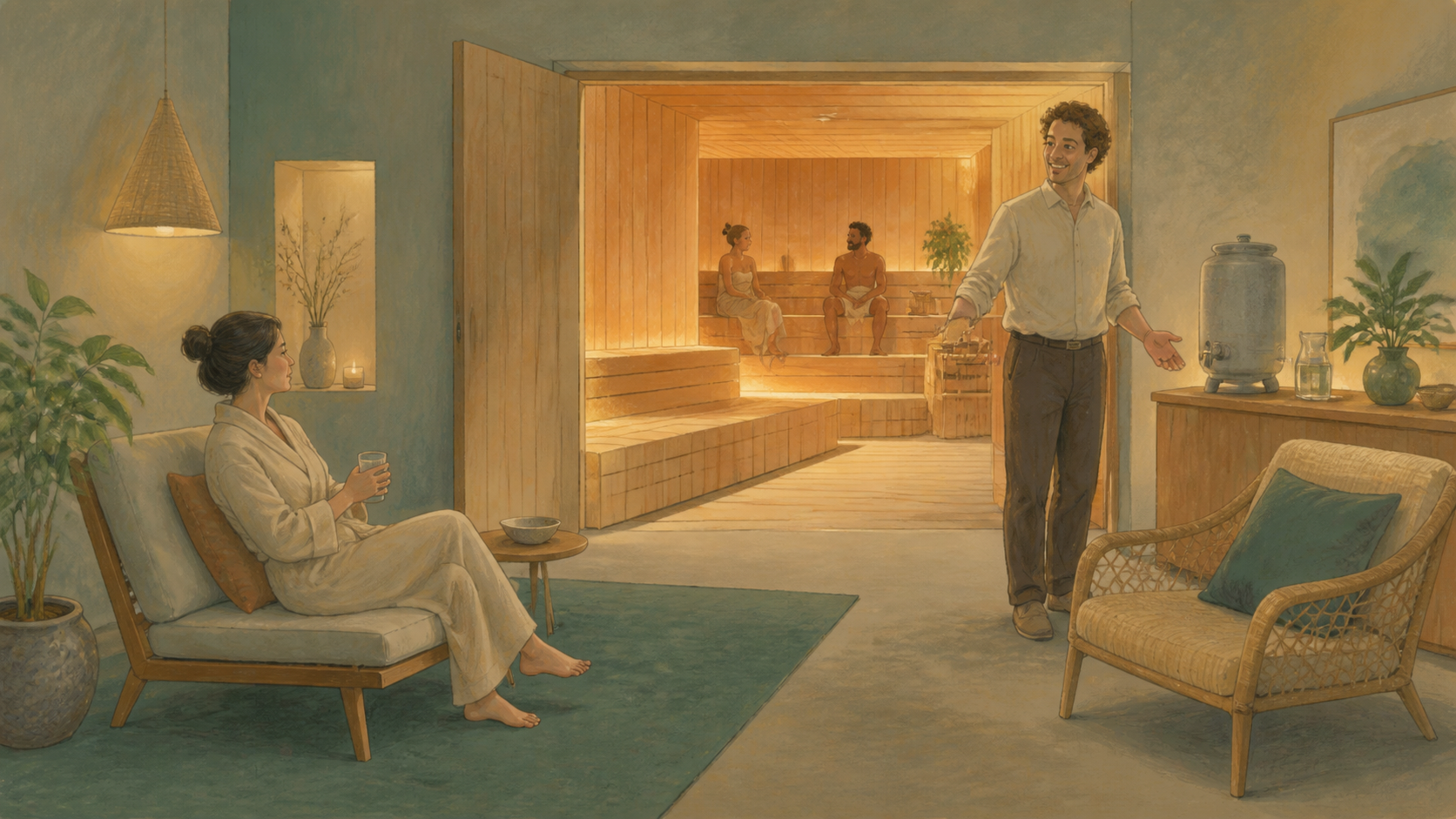
For an operator developing a programme, the interval should have an artistic and a service purpose. A story can pause at a natural point; the host can explain what follows; a guest can decide whether to return. The cooling area should feel like a legitimate place to spend the experience, rather than a holding space for people who could not finish.
Plan what happens to someone who leaves during an act. They should not have to cross the principal performance area, negotiate with an artist or explain their choice to other guests. Re-entry also needs a clear arrangement. A simple welcome from a host can preserve the atmosphere without making the guest feel they have disrupted it.
None of this establishes a universally safe duration or temperature. Those decisions need a competent, site-specific assessment, equipment guidance and appropriate professional advice. Published timings from another operator should never be treated as instructions for every audience.
Make participation easy to understand
A guest should be able to recognise the nature of the event before purchasing. Describe whether there is spoken language, audience interaction, music, scent or changing light. Explain clothing, arrival arrangements and the place of bathing within the session. A title that sounds contemplative should not be the only clue to a programme that includes vigorous choreography and loud sound.
Use a short public description supported by a more detailed access conversation when needed. Ask what information would help the guest decide, rather than requiring them to disclose a personal history simply to learn how the event works. Keep essential participation information available without forcing a booking or a marketing subscription.
Choice continues after arrival. Hosts should explain that watching quietly, declining an invitation and stepping outside are acceptable. For a spa offering other services, consider an alternative cultural activity outside the hot room. Present that option as a worthwhile experience in its own right, without promising that every format will suit every person.
Where photography is proposed, decide the policy before the event. A promotional camera changes the conditions of a shared bathing space. A separate staged session with willing participants is easier to explain than assuming ticket purchase grants permission to use every guest's image.
Design for the whole audience journey
Studio Three Sixty describes Sauna Theatre as modular and portable, and identifies audience movement, bench geometry, heat and airflow among the considerations behind its design. The studio also describes future touring ambitions. Portability is a design characteristic; a future itinerary remains a plan unless individual dates and venues are confirmed.
For any proposed installation, the full journey deserves scrutiny. The UK Health and Safety Executive's event venue guidance identifies exits and audience circulation as factors that can limit capacity. A nominal seat count therefore cannot settle the capacity of a complete spa event. Changing areas, waiting spaces and the route between them need to work together.
Ask a competent team to review the proposed use of the actual site, including access, evacuation and suitable technical equipment. Rehearse ordinary movement as well as an interruption: the person arriving late, the guest returning to a locker and the group leaving at the same time. A clear drawing is a useful starting point, but observing a rehearsal can expose conflicts that a seating plan misses.
Credit the culture and commission the artist
Sauna culture should not become a generic label for any performance involving heat. UNESCO's record of sauna culture in Finland, inscribed in 2020, describes a living practice transmitted through families and other communities. That recognition concerns cultural heritage; it is not an endorsement of a commercial event or a certificate for a particular spa.
When a programme draws on a tradition, identify the practitioners and ask how they want their work described. Distinguish a contemporary adaptation, an artist's interpretation and a historical account. If a dramatic story contains conjecture, label it as storytelling rather than presenting it as settled scholarship. An evocative scene does not need an invented ancient provenance to be worthwhile.
Set out creative credit, rehearsal time, payment, recording permissions and any agreed reuse of the work. A visiting artist should not discover after the event that the spa expects to repeat the material indefinitely. Equally, an operator needs to know what can be changed if the room, audience or service conditions require it.
The Journal's discussion of sauna standards and living culture provides a wider context. Here, the additional task is to make authorship and interpretation visible within a specific commissioned programme.
Price the production, not just the bench
A performance creates costs and responsibilities that a normal bathing session may not carry. Build a working budget that separates the artist's fee, preparation, technical support, hosting, cleaning and any disruption to ordinary spa access. Include the time spent welcoming and resetting, not only the minutes when a performer is visible.
Then test the commercial proposition against the actual audience. A complimentary invitation, a discounted festival ticket and a full-price hotel package answer different questions. Record which one generated each booking. Otherwise, an encouraging attendance figure can disguise uncertainty about what customers would buy without a launch incentive.
Use cautious scenarios for repeat runs. Ask whether the programme still works with fewer paid guests or a replacement performer. Define how a cancellation will be handled before offering the event for sale. These are planning questions for the operator; the Edinburgh sources reviewed here do not supply a verified margin, return on investment or repeat-booking rate.
Consider the relationship with ordinary spa guests as well. If a performance closes a shared sauna, explain the timetable before those guests arrive and account for the access they lose. A ticketed event should not depend on quietly reducing another customer's experience. In a hotel, reservations, reception and the spa need the same description of what is included.

What does this mean for spa and wellness professionals?
For owners and programme directors
Choose one clear artistic proposition and define what would make it worth repeating. The answer might concern audience understanding, quality of delivery or a sustainable commercial contribution. Do not make a health outcome the default justification for cultural programming. A thoughtful encounter with art can be the stated purpose.
For hosts, practitioners and technical teams
Allocate responsibilities in advance. The artist's attention may be on the work; someone must also watch the guest journey and be authorised to pause the event. A named decision-maker and a rehearsed communication method are more useful than an assumption that everyone will notice the same problem.
For researchers and commercial partners
Separate an interesting concept from evidence of reliable delivery. Directory entries for Thermae Bath Spa and The Gainsborough Bath Spa are starting points for further venue research, not evidence that either offers this format, supports the Edinburgh programme or has received an award. Confirm current services directly. Directory presence establishes none of those additional claims.
A rehearsal that tests the service
Bring the artist, host, technical lead and relevant operations staff into the same rehearsal. Start with the guest's first contact and finish after the space has been reset. Check whether the advertised description still matches the experience once changing, orientation, intervals and departure are included.
The HSE's crowd monitoring guidance distinguishes the number of people from their distribution and identifies entrances, exits and bottlenecks as areas to watch. Apply that distinction when reviewing a rehearsal: an acceptable total does not explain why everyone is waiting in one narrow place.
Record observations without inventing a universal pass mark. Note where guests hesitated, whether hosts could communicate clearly and which moments required an unplanned intervention. Revise the sequence, then repeat the relevant portion. Rehearsal findings belong to the specific programme and site; they should not become general claims that a format is suitable for everybody.
Give performers a separate opportunity to comment. Could they hear the host, see the room and stop comfortably when asked? Did the artistic sequence depend on a technical cue that was hard to repeat? These questions invite useful criticism without asking a performer to make decisions outside their competence. Document who will resolve each issue and which changes need another rehearsal.
The Journal's thermal commissioning discussion covers the wider relationship between heat, cooling and movement. An artistic programme adds another layer: the performance needs to remain coherent when a guest chooses a different path.
What Edinburgh cannot establish
The available material supports a current cultural experiment at an operating festival venue. It does not establish that adding performance to sauna produces a particular medical effect, that a portable venue is ready for every site or that another operator will reproduce the same response.
Keep delivery, experience and commercial evidence separate. A show taking place demonstrates delivery. A guest's account describes an individual experience. Paid demand across repeat dates addresses a different question again. None should silently stand in for the others.
A short feedback form can ask whether the description was accurate, whether guests understood their options and which part of the work they remembered. Include space for discomfort or disappointment, and invite feedback from people who left early. Their account may reveal a service problem that enthusiastic comments from those who stayed would miss. Treat this as programme evaluation, not a clinical study.
The most useful lesson is therefore a discipline of programming: make a credible artistic offer, explain participation clearly, and give guests room to choose. Spa culture can expand through stories and shared attention while remaining honest about what has been observed and what still needs to be learned.
Questions to settle before announcing a programme
Does every spa need a performance sauna?
No. A reading, conversation or musical commission in a comfortable lounge may fit the audience and the work better. Start with the cultural purpose and choose a setting that can support it.
Can a show timetable determine a heat protocol?
No. An artistic running time is not a safety assessment. Develop the operating arrangements with competent specialists and preserve the guest's ability to leave independently of the script.
What should be published after an initial run?
Report what happened, who created the work and what the operator learned, using consented material and clearly defined measures. Avoid converting a full room or an enthusiastic comment into an unsupported health or market claim.
