
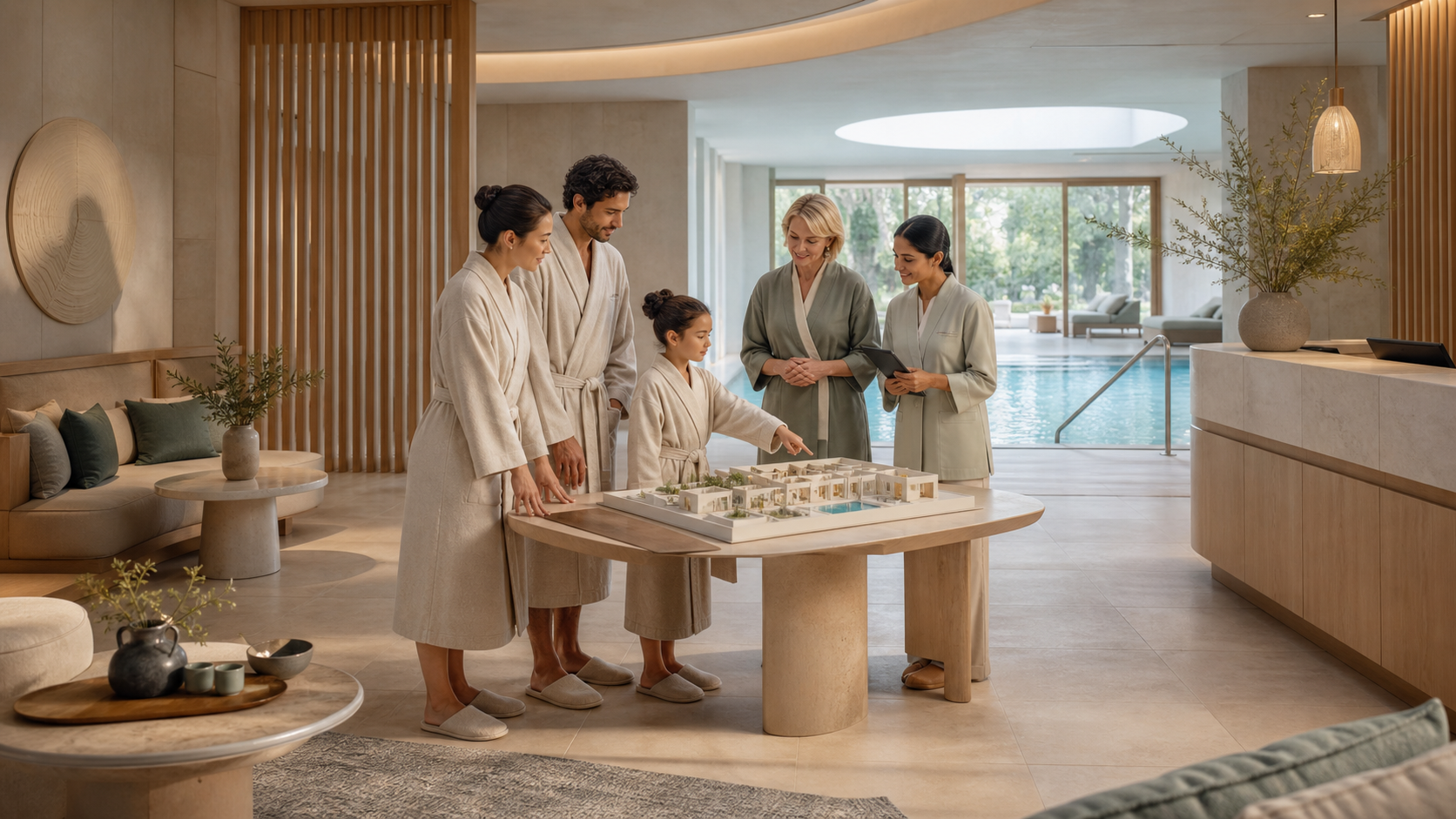
Family spa access is moving from a peripheral hotel amenity to a deliberate operating choice. A recent Spa Business report describes The Landmark London’s reopened spa, including new thermal facilities and treatments designed for parents, children and teenagers. The property’s current spa page confirms that the facility is open, lists a Finnish sauna, steam room, vitality pool and treatment rooms, and publishes two daily periods as children’s hours.
Those facts establish a live service offer, not its results. They do not prove that every family wants the same experience, that a child treatment is suitable for every child, that a time window is a complete safety system, or that the renovation produced better guest, worker or commercial outcomes. They also say nothing about Spa Awards nomination, judging or merit.
The useful industry question is broader: how can a spa welcome families without weakening water safety, safeguarding, child choice, privacy, staff boundaries or the calm promised to other guests? The answer is not an “all ages” badge. It is a designed service with explicit age bands, zones, supervision, consent and assent, capacity, competencies, evidence and stop rules.
What the Landmark London reopening establishes
The specialist report, dated 27 July 2026, says the 710-square-metre spa reopened after a renovation and added a thermal suite, family treatments and membership options. It describes a parent-and-child treatment for children aged eight and above and a facial aimed at teenagers aged 12 to 16. These are reported menu details from one property. They are not a universal recommendation for ages, products, treatment duration or thermal access.
The official property page provides a narrower current record. It lists opening hours of 7am to 9:30pm, with children’s hours from 9am to 11am and 3pm to 5pm, alongside the sauna, steam room, vitality pool and five treatment rooms. It does not, on that page, publish the full operating controls behind those windows. Spa leaders should therefore resist filling gaps with assumptions about supervision, heat access, booking eligibility or outcomes.
This distinction is important. A menu can define what is sold. An operating standard must define who may use each element, under what conditions, with which adult responsibility, staff oversight, information, exclusions, emergency arrangements and evidence. A renovation can create space for a family offer; daily practice determines whether the offer is controlled and respectful.
Family spa access begins with a service map
“Children allowed” is too vague to operate. A property may include a swimming pool, vitality pool, hot tub, steam room, sauna, ice feature, relaxation lounge, gym, changing area and treatment rooms. Each has different physical, microbial, heat, privacy and behavioural questions. A single minimum age across the whole spa can be easy to communicate but poorly matched to actual risk.
Start with a zone-and-service matrix. For every area, record the intended age range, whether an adult must be present, the maximum adult-to-child relationship, staff supervision, session duration, capacity, water depth or temperature where relevant, accessibility, clothing and privacy expectations, contraindication messaging, cleaning controls and emergency response. Link the matrix to local law, insurer conditions, manufacturer instructions and competent professional advice.
Keep three decisions separate. Admission decides who may enter. Participation decides which facilities or treatments a guest may use. Supervision decides who must remain close enough to observe and intervene. A child may be admitted during a family period but excluded from a hot spa pool; a teenager may be eligible for a treatment but still require a parent or guardian to authorise the booking and remain according to the property’s safeguarding policy.
The same map should protect adult expectations. Identify quiet zones, family zones and transition routes. Decide whether separation is temporal, physical or both. Check sound transmission, wet circulation, changing-room privacy, seating, towel demand and queue behaviour at peak load. Family inclusion and adult calm do not have to compete when the product describes both honestly and capacity matches the space.
Pool supervision is a property decision, not a parent waiver
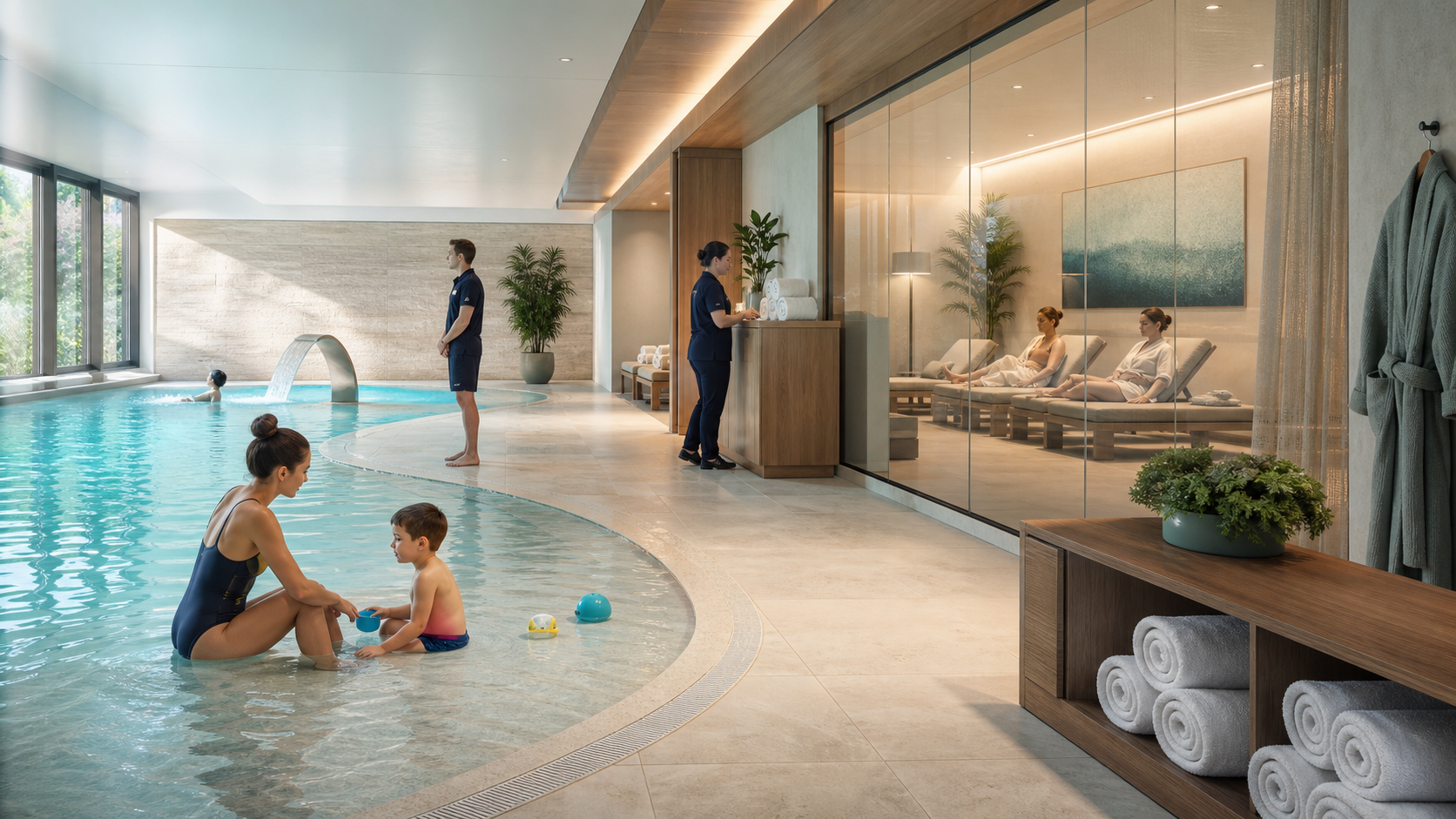
The UK Health and Safety Executive’s current swimming-pool safety guidance says operators must assess risks to workers and users and determine supervision for their particular facility. It specifically directs operators to consider how many children under eight one adult can safely supervise during unprogrammed sessions, taking account of pool design, access routes, staffing and swimming ability. The guidance does not provide a universal ratio for every pool.
That is the correct operating principle internationally: parents have responsibilities, but the operator retains control of the premises, product and admission rules. A disclaimer cannot compensate for poor sightlines, an unclear depth transition, an overwhelmed adult, conflicting staff roles or an emergency response that exists only in a manual.
Build the pool safety operating procedure around the real session. Define who watches the water, whether that person has other duties, how attention is handed over, how non-swimmers are identified, which aids or toys are allowed, when a session is paused and how rescue, first aid and emergency contact work. Test it with the expected mix of ages and abilities rather than an empty pool.
The HSE also says that where constant poolside supervision is not required by the risk assessment, a trained person must still be able to respond immediately when the pool is in use. Staff competence, communication and rehearsal matter. A uniform, qualification or parent signature should never be treated as proof that the complete system works.
Water and thermal facilities require separate controls
Family hours can change bather load, splash, organic contamination, towel use, noise and staff demand. The World Health Organization’s guidelines for swimming pools and similar environments organise the public-health problem around drowning and injury, microbial contamination and chemical exposure. Their purpose is to support safer operation without discouraging beneficial use. They are a global framework, not a substitute for local standards.
Heated aerated water needs particular attention. The HSE’s spa-pool infection-control guidance treats spa-pool systems as a recognised source of infectious-agent risk and covers design, commissioning, operation, maintenance, water testing and inspections. Its user guidance includes close child supervision and warns against allowing very young children into spa pools. Local rules and the specific system must determine the final policy.
Do not let the word “family” imply access to every thermal feature. Write separate rules for the swimming pool, vitality pool, hot tub, sauna, steam room, cold feature and experience shower. Explain them before purchase and again on arrival. If evidence or competent advice does not support a child’s use of a facility, exclude that use clearly while preserving other ways for the family to share time.
The Journal’s analysis of sauna standards offers a compatible method: define the format, map voluntary guidance to local duties, commission the entire heat-and-cooling journey and protect workers as well as guests. A family programme adds age, communication and adult-responsibility layers; it does not remove engineering or water controls.
Safeguarding must reach the treatment room
A treatment involving a child or teenager creates different boundaries from a shared pool visit. The spa should define eligible services and ages, who may book, who authorises, whether the child can decline or stop, whether a parent remains present, how draping and changing are handled, which staff may deliver the service, and how concerns or incidents are recorded and escalated.
England’s Working Together to Safeguard Children 2026 is statutory multi-agency guidance for specified organisations and professionals, not a ready-made hotel-spa procedure. Its broader message is still relevant: safeguarding is a shared responsibility supported by accountable organisations, information handling and clear routes for help and protection. Operators must determine the duties that apply to their own service and jurisdiction.
Use a written safeguarding policy that fits hands-on hospitality services. Name a responsible lead, recruitment and background-check process where applicable, training and refresher schedule, appropriate-conduct boundaries, one-to-one working controls, open-door or parent-presence rules, concern-reporting route, emergency contacts, record retention and contractor expectations. Test whether reception, therapists, pool staff and managers give the same answer.
Parent authorisation should not silence the child. Article 12 of the UN Convention on the Rights of the Child establishes a child’s right to express views in matters affecting them, with due weight for age and maturity. In practical spa design, that supports age-appropriate explanations, genuine choices, a check that the child wants to proceed and an immediate stop if they withdraw agreement or show distress.
Design the treatment and product boundary
A child-sized version of an adult treatment is not automatically appropriate. Review contact, pressure, body area, heat, sound, light, fragrance, exfoliation, active ingredients, equipment, duration, positioning and the language used to describe results. Ask suppliers for age-relevant instructions and evidence, but keep the operator’s own assessment independent. “Gentle”, “natural” and “teen” are marketing descriptors, not safety findings.
Separate hospitality from diagnosis. A therapist can ask service-relevant questions and explain what a treatment involves; they should not diagnose skin, sleep, hormonal or emotional conditions unless their regulated scope and the setting authorise it. Promotional language should describe the experience without promising medical, developmental or guaranteed cosmetic outcomes.
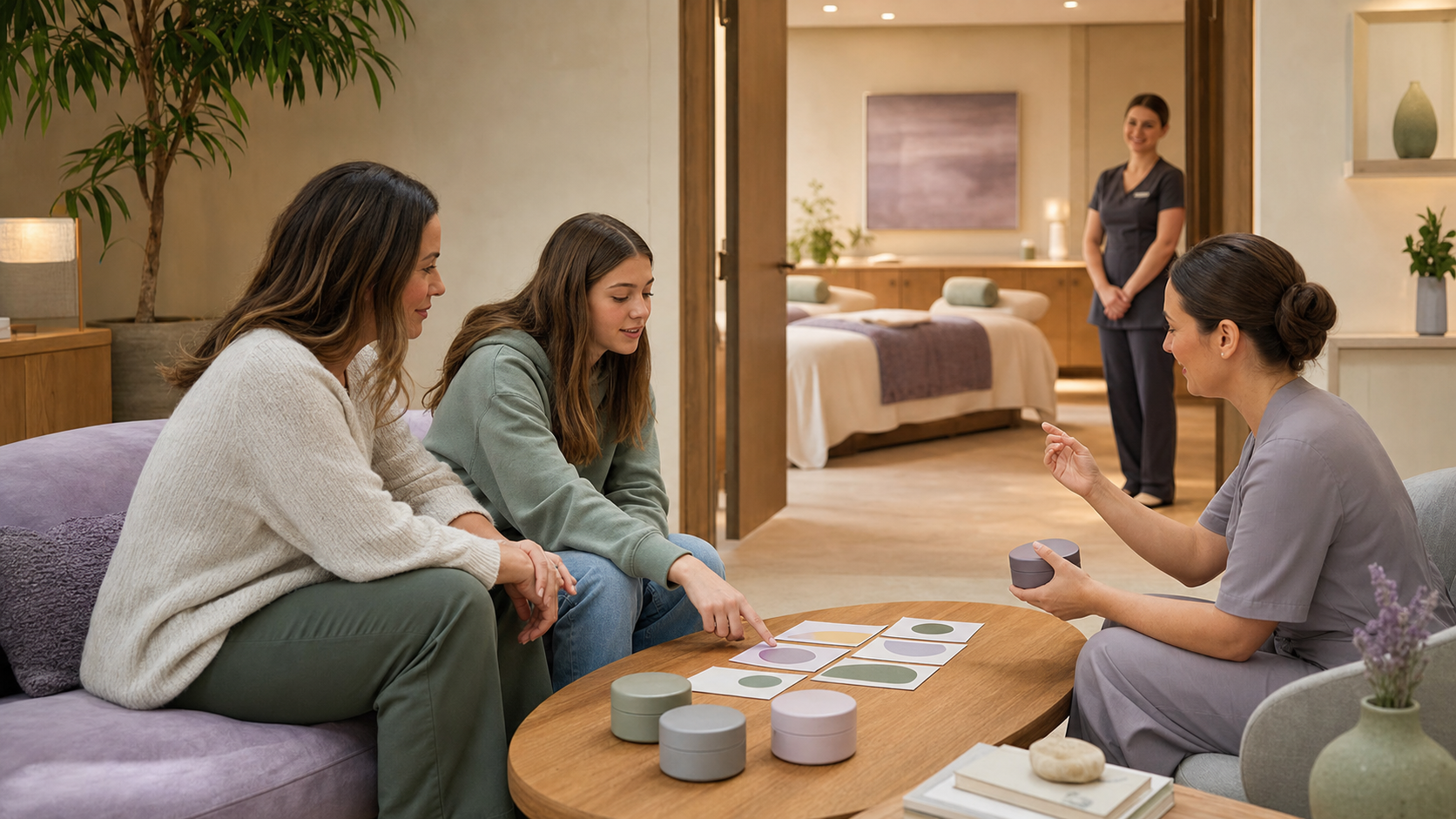
Build choice into the script: product-free or fragrance-free alternatives, shorter duration, parent in or out within policy, different music or lighting, no-touch areas, a pause signal and the right to end without argument. Record only what the service genuinely needs. If an online booking or account service is likely to be accessed directly by children, review the Information Commissioner’s Children’s code and obtain specialist advice on its applicability, age assurance, privacy information and data minimisation.
Protect capacity, staff and the core promise
Family periods are capacity products. Count more than bodies in the pool: include changing lockers, family changing space, treatment-room turnover, reception questions, towels, laundry, cleaning, loungers, quiet-zone seats and staff attention. An hour that looks commercially underused may be operationally constrained elsewhere.
The Journal’s guide to spa day access recommends defining inventory, protecting existing entitlements and measuring contribution rather than selling apparently spare space. Apply the same discipline here. Protect resident guests, members and adult spa-day promises; publish the family windows; cap bookings; and retain authority to slow or stop admission when the operating conditions differ from the plan.
Staff need a workable service, not just a new menu. Allow time for age-appropriate consultation, parent questions, room reset and incident records. Avoid leaving one employee simultaneously responsible for reception, pool observation and treatment preparation. Review exposure to heat, noise, water, lifting and emotionally difficult situations. Make the stop rule operationally safe: a therapist or pool attendant should not be penalised for pausing a service when boundaries or conditions are unclear.
What does this mean for spa and wellness professionals?
For owners and asset managers, approve a bounded family product, not a marketing label. Fund supervision, water controls, accessible changing, acoustic separation, safeguarding systems, training and realistic staffing before forecasting revenue.
For spa directors, own one matrix connecting age, zone, adult responsibility, staff oversight, capacity, information, cleaning and emergency response. Reconcile the website, booking engine, confirmation message, reception script and treatment protocol.
For pool and facilities leaders, test sightlines, depth transitions, circulation, rescue access, water treatment and peak bather load. Keep swimming, spa-pool and thermal rules distinct, even when the guest experiences one seamless journey.
For therapists and guest teams, explain the service in age-appropriate language, seek both required adult authorisation and the young guest’s willing participation, preserve privacy and stop when consent, competence or conditions are uncertain.
For marketers and awards researchers, distinguish the existence of family hours or treatments from implementation quality and outcomes. Directory presence, a renovation, a family menu or positive copy is not proof of safeguarding, safety, satisfaction, inclusion or award merit.
A 30-day controlled family-access review
Days 1–7: define. Inventory every zone and treatment. Record age bands, supervision, adult presence, capacity, water and heat controls, product boundaries, changing arrangements, accessibility and the information currently shown before purchase. Mark contradictions and unknowns.
Days 8–14: verify. Map local law, regulator guidance, insurer requirements, supplier instructions and competent advice. Review safeguarding, recruitment, training, emergency response, water records and data handling. Do not copy another property’s ages or ratios without a local assessment.
Days 15–21: rehearse. Walk the full journey with staff and representative family scenarios. Test a lost child, a distressed young guest, an overcrowded pool, a parent who wants to leave, a treatment refusal and a quiet-zone complaint. Correct scripts and responsibilities.
Days 22–30: pilot and measure. Run bounded sessions with conservative capacity. Track admissions, refusals, incidents, near misses, water exceptions, treatment stops, complaints, compliments, quiet-zone impact, staff load and rebooking. Review the evidence before expanding.
For UK market context, readers can browse the active directory pages for Thermae Bath Spa and ESPA at Lucknam Park. These links do not establish either property’s current family policy, facilities, visit, testing, nomination, judging, result or endorsement; those require current property-level verification.
What remains unproven
The reviewed sources do not establish demand for family spa access across markets, the safest universal age for any treatment or facility, or the commercial effect of a family programme. They do not show whether The Landmark London’s new offer has improved incidents, satisfaction, repeat use, staff experience or revenue.
The credible conclusion is narrower. Family access can expand hospitality choice when it is treated as a controlled operating system. The professional standard is not whether children appear in the brochure. It is whether the spa can explain who the service is for, protect those who use and deliver it, preserve choice and calm, and show what its evidence does—and does not—prove.
Frequently asked questions
Should one minimum age apply across the spa?
Not automatically. Pools, hot spa pools, saunas, steam rooms, gyms and treatments have different controls. A property may choose one simple rule, but it should be supported by a zone-specific assessment.
Is parent supervision enough in a swimming pool?
No single statement answers every setting. The operator must assess the pool, users, staffing and activity, define adult responsibilities and ensure competent emergency response. A parent waiver does not transfer control of the premises.
Can a parent consent to any child spa treatment?
No. The service must be lawful, within staff competence, suitable for the defined age and supported by product and operating controls. The young guest should receive an understandable explanation and be able to decline or stop.
Do family hours prove a spa is family-friendly?
They prove only that a time window is published. Credible family access also requires clear eligibility, supervision, safeguarding, water and thermal rules, accessible information, staff capacity and evidence from actual operation.
